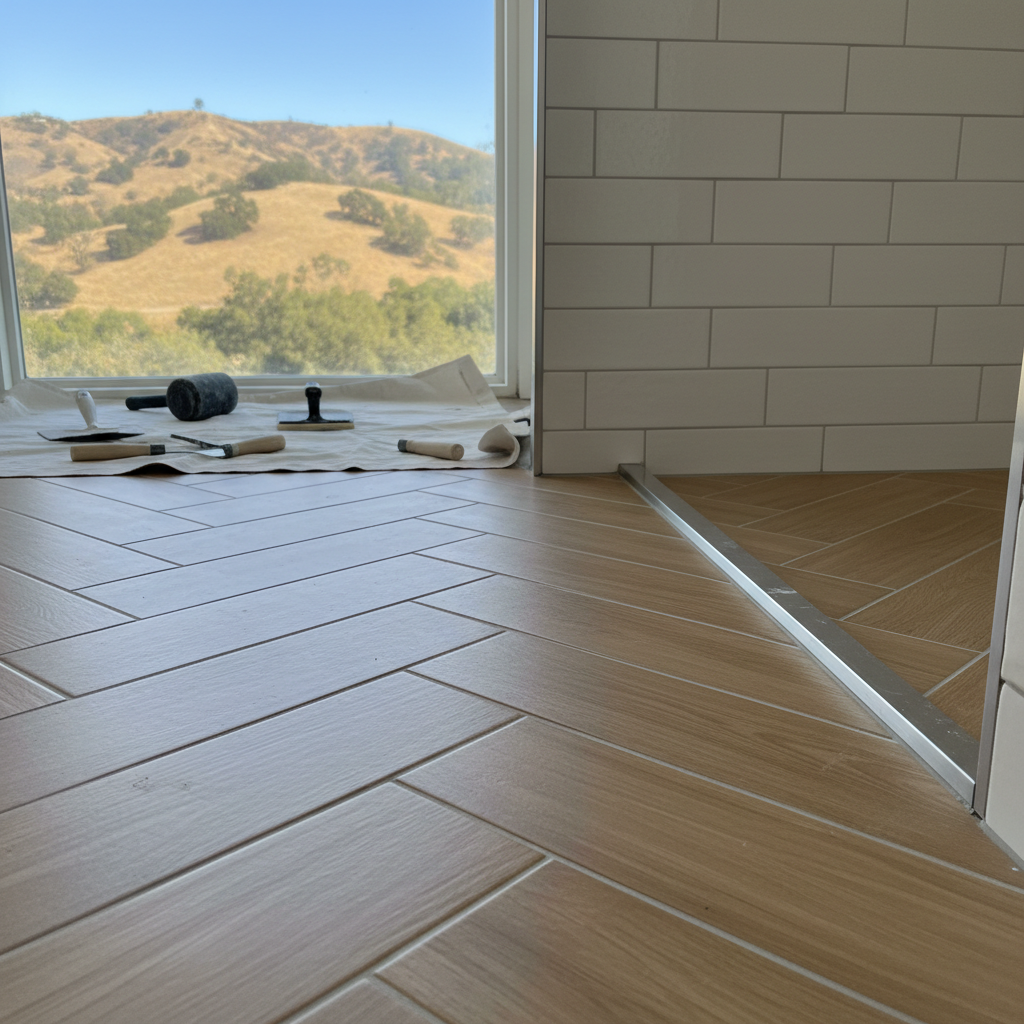
What's the best flooring material for a bathroom or kitchen in Lynwood?
This is probably the question I get asked most often, and honestly, there's no single "best" choice for everyone. It really just depends on what you're looking for. For bathrooms, you absolutely need something waterproof or at least highly water-resistant. Porcelain tile is a classic for good reason; it's super durable, doesn't soak up water, and comes in a zillion styles. Vinyl plank, especially the newer luxury vinyl plank (LVP) or luxury vinyl tile (LVT), is another fantastic option. It's waterproof, feels softer underfoot than tile, and can look incredibly realistic, mimicking wood or stone. We've put a lot of LVP in homes around the Hollydale area, and folks really love how easy it is to keep clean. For kitchens, you've got a bit more wiggle room, but durability and easy cleaning are still super important. Tile and LVP are great here too. Hardwood can work in kitchens if you're careful with spills and maintain it well, but it's not my top pick if you've got a busy family or tend to be a little messy in the kitchen. Laminate is an option, but please make sure it's a high-quality, water-resistant type; cheaper laminates can swell up if they get wet. What a headache!
How much does new flooring or tile installation really cost?
Alright, let's talk money. This is where things get a bit complicated because there are so many moving parts. First, you've got the cost of the material itself. That can range from a couple of bucks a square foot for basic ceramic tile or vinyl, all the way up to $15-$20+ a square foot for high-end porcelain, natural stone, or specialty wood. Then there's the labor. Installation costs depend on the material, how complex the job is (think intricate tile patterns or subfloor prep), and, of course, the size of the area. For tile, you're usually looking at $8-$15 per square foot just for installation, sometimes more for tricky layouts or those smaller, detailed tiles. LVP or laminate might be $3-$7 per square foot for installation. And don't forget about tearing out old flooring, any subfloor repairs, trim work, and moving furniture. A good contractor, like us at Lynwood Bathroom Construction, will give you a detailed quote that breaks all this down so you know exactly what you're paying for. Don't just pick the cheapest bid; make sure they're including everything and have a solid reputation.
How long does a typical tile or flooring installation take?
Again, it varies a lot, but I can give you some general ideas. For a standard bathroom, let's say 50-70 square feet, tiling can take anywhere from 2-4 days. That includes getting things ready, laying the tile, letting the thinset cure, grouting, and sealing. For a bigger kitchen or living area, you could be looking at a week or even two, especially if there's a lot of subfloor work or a complex pattern involved. LVP or laminate goes down much faster. A skilled crew can often install a couple hundred square feet of LVP in a single day, sometimes more. Hardwood can take a bit longer than LVP, especially if it's nail-down. Always remember to factor in drying and curing times; you simply can't rush those steps if you want the job done right and to last.
Do I need to remove the old flooring myself before you start?
You certainly can, but you don't have to. Most homeowners actually prefer that we handle the demolition. It's usually a messy, dusty, and physically demanding job, especially if you're dealing with old tile or flooring that's been glued down tight. We've got the right tools and know how to do it efficiently and safely, minimizing dust spread where we can. Plus, when we do the demo, we can immediately check the subfloor for any issues – rot, cracks, unevenness – that might need fixing before the new floor goes down. If you do decide to tackle it yourself, just make sure you know what you're getting into and have a plan for getting rid of the debris. Just be aware that if you uncover problems, we'll still need to charge for any necessary repairs.
What about cleaning and maintenance for different flooring types?
This is where your choice really starts to affect your daily life, isn't it? Porcelain and ceramic tile are pretty low maintenance. A regular sweep or vacuum and a damp mop with a mild cleaner are usually all you need. Grout lines can get dirty, so a good grout sealer is important, and you might need to scrub them occasionally. LVP and LVT are even easier; just sweep and damp mop. They're very resistant to stains and spills. Hardwood requires a bit more care. You need to use specific hardwood cleaners, avoid too much water, and protect it from scratches with furniture pads. Laminate is similar to LVP but usually a bit less forgiving with standing water. Natural stone like marble or travertine looks beautiful, but it's porous and needs regular sealing and specific cleaners to avoid etching or staining. Always check the manufacturer's recommendations for your specific product; they know their stuff best.
Can I install new flooring over my existing floor?
Sometimes, yes, but not always. It depends entirely on what you have now and what you want to put down. If your existing floor is very stable, flat, and well-adhered, and you're going with something like LVP or a floating laminate, it might be possible. For example, if you have old, flat vinyl or linoleum, we can often go right over it with LVP. However, if your existing floor is uneven, damaged, or has multiple layers, it absolutely needs to come out. You can't just cover up problems; they'll just show through to your new floor and cause issues down the line. We never recommend tiling over existing tile unless it's a very specific, rare situation, and even then, it adds a lot of height. It's always best for us to take a look during an estimate to tell you for sure what's feasible for your specific situation.
Why should I choose a local Lynwood contractor for my flooring?
Look, you've got a lot of choices out there, but working with someone local, like Lynwood Bathroom Construction, has some real advantages. First, we know the local conditions. We understand how the humidity in the summer or the occasional dampness from our winter rains can affect different materials, especially in older homes around the Atlantic Avenue corridor. We're familiar with common subfloor issues in homes built in the 50s and 60s. Second, you're supporting a business right here in your community. We live here, our kids go to school here, and our reputation matters a lot. You're not just a number to us. If you have a question or an issue down the road, you know exactly who to call, and we're right around the corner. We're invested in doing quality work for our neighbors because, well, we see you at the grocery store. It's all about trust and accountability.